Vyvyan Evans · Paperback
A Glossary of Cognitive Linguistics (Glossaries in Linguistics)
Vyvyan Evans. A Glossary of Cognitive Linguistics (Glossaries in Linguistics) .
Knihy k zakoupení na Amazon.co.uk
Vyvyan Evans · Paperback
Vyvyan Evans. A Glossary of Cognitive Linguistics (Glossaries in Linguistics) .
Friedrich Ungerer, Hans-Jorg Schmid · Paperback
Friedrich Ungerer, Hans Jorg Schmid. An Introduction to Cognitive Linguistics (Learning About Language) . Cognitive linguists share the belief that language is based on our experie…
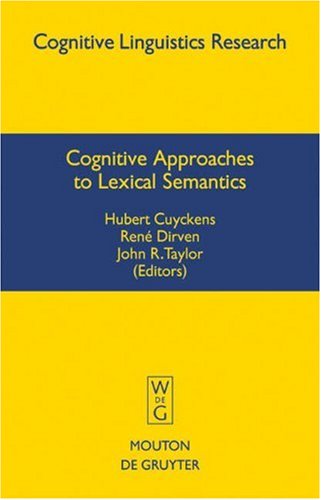
This collected volume presents radically new directions which are emerging in cognitive lexical semantics research. A number of papers re-ignite the polysemy vs. monosemy debate, and testify to the fact that polysemy is no longer simply taken for granted, but is currently a much more contested issue than it was in the 1980s and 1990s.
Mark Turner · Hardcover
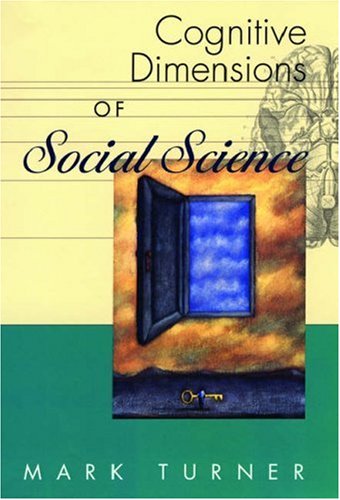
What will be the future of social science? Where exactly do we stand, and where do we go from here? What kinds of problems should we be addressing, with what kinds of approaches and arguments?
Preface; XI; Chapter 1; The cognitive basis of language: Language and thought 1; 1.0 Overview 1; 1.1 Introduction: Sign systems 1; 1.2 Structuring principles in language 5; 1.3 Lin…
John R. Taylor · Paperback
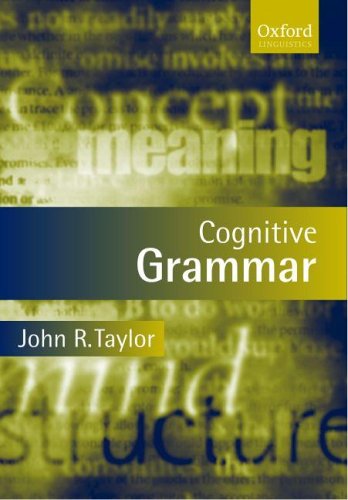
'Cognitive Grammar' is is a theory of language which has been developing since the late 1970's. Underlying the theory is the assumption that language is inherently symbolic in nature and that a language provides its speakers with a set of resources for relating phonological structures with semantic structures. John R. Taylor introduces the theory of Cognitive Grammar, placing it in the context of current theoretical debates about the nature of linguistic knowledge, and relating it to more general trends in 'cognitive' linguistics.
William Croft, D. Alan Cruse · Paperback
Clearly organized and written, this textbook provides a useful introduction to the relationship between language and cognitive processing in the human brain. It covers the topics likely to be encountered in a course or seminar, and provides a synthesis of study and research in a fast-growing field of linguistics. The much-needed introduction will be welcomed by undergraduates and graduates in linguistics and cognitive science.
This work applies the theory of cognitive linguistics to the analysis of a variety of grammatical phenomena in non Indo European languages. In previous studies of languages from no…
This text aims to show that the notions developed within the cognitive linguistics movement afford an insightful perspective on several important areas of second language acquisiti…
Vyvyan Evans; Melanie Green · Paperback
A general introduction to the area of theoretical linguistics known as cognitive linguistics, this textbook provides up-to-date coverage of all areas of the field, including recent developments within cognitive semantics (such as Primary Metaphor Theory, Conceptual Blending Theory, and Principled Polysemy), and cognitive approaches to grammar (such as Radical Construction Grammar and Embodied Construction Grammar). The authors offer clear critical evaluations of competing formal approaches within theoretical linguistics.
David Lee · Paperback
Cognitive linguistics is a relatively new theory of language that challenges many of the basic assumptions of traditional approaches. Drawing on his long-standing interest in the relationship between language and perspective, Lee here sets out to make the theory accessible to readers who have no prior training in the discipline.
Over the past decade, Cognitive Linguistics has grown to be one of the most broadly appealing and dynamic frameworks for the study of natural language. Essentially, this new school of linguistics focuses on the meaning side of language: linguistic form is analysed as an expression of meaning. And meaning itself is not something that exists in isolation, but it is integrated with the full spectrum of human experience: the fact that we are embodied beings just as much as the fact that we are cultural beings.
Cognitive Linguistics: Current Applications and Future Perspectives is an up-to-date survey of recent research in Cognitive Linguistics and its applications by prominent researchers. The volume brings together generally accessible syntheses and special studies of Cognitive Linguistics strands in a sizable format and is thus an asset not only to the Cognitive Linguistics community, but also to neighbouring disciplines and linguists in general. The volume covers a wide range of fields and combines wide accessibility with a highly specific information value.
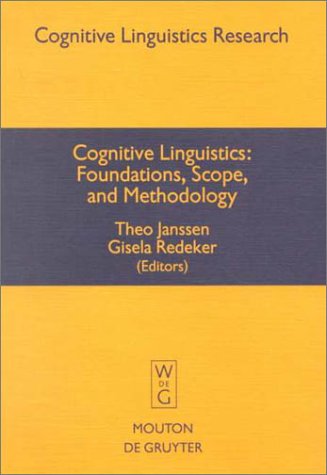
In this volume, leading cognitive linguists and contributors from related fields discuss and illustrate the central theoretical and methodological tenets of cognitive linguistics.
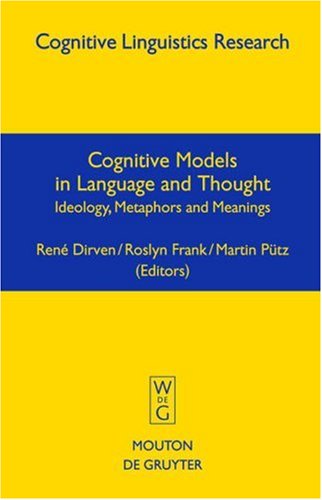
Roslyn Frank, Martin Putz · Hardcover
Roslyn Frank, Martin Putz. Cognitive Models in Language and Thought: Ideology, Metaphors and Meanings (Cognitive Linguistics Research) . This volume offers a number of representati…
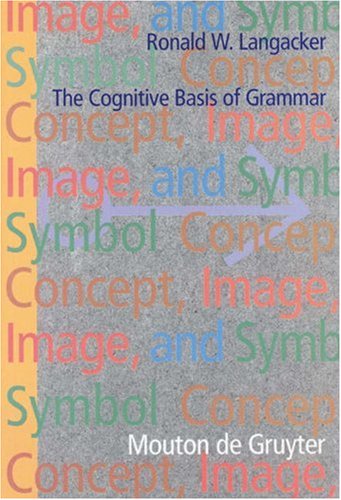
Ronald W. Langacker · Paperback
This research monograph develops and illustrates an innovative theory of linguistic structure, called "cognitive grammar", and applies it to representative phenomena in English and other languages. Cognitive grammar views language as an integral facet of cognition and claims that grammatical structure cannot be understood or revealingly described independently of semantic considerations. It argues that grammar forms a continuum with the lexicon and is reducible to symbolic relationships (i.e.
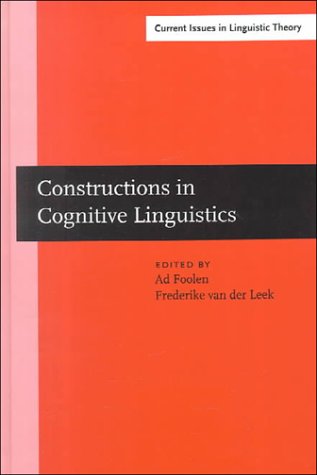
International Cognitive Linguistics Conference, Ad Foolen, Frederike Van Der Leek · Hardcover
International Cognitive Linguistics Conference, Ad Foolen, Frederike Van Der Leek. Constructions in Cognitive Linguistics: Selected Papers from the Fifth International Cognitive Li…
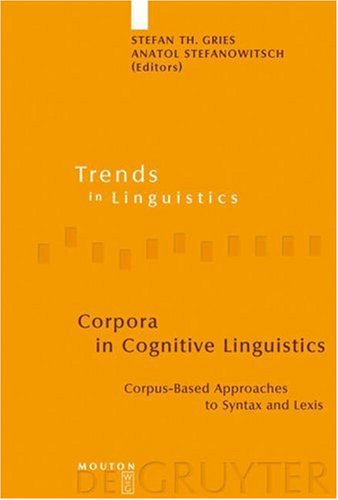
Anatol Stefanowitsch (Editor) Stefan Th. Gries (Editor) · Hardcover
Cognitive Linguistics, the branch of linguistics that tries to "make one's account of human language accord with what is generally known about the mind and the brain," has become one of the most flourishing fields of contemporary linguistics. The chapters address many classic topics of Cognitive Linguistics.
In the first of his three debates with George W. Bush, 2004 presidential candidate John Kerry argued against the war in Iraq not by directly condemning it but by citing the various ways in which airport and commercial shipping security had been jeopardized due to the war's sizable price tag. In so doing, he re-framed the war issue to his advantage while avoiding discussing it in the global terrorism terms favored by President Bush.
George Lakoff, Howard Dean, Don Hazen · Paperback
Don't Think of an Elephant!
Victor Turner · Paperback
Victor Turner. Dramas, Fields, and Metaphors: Symbolic Action in Human Society (Symbol, Myth, & Ritual) .
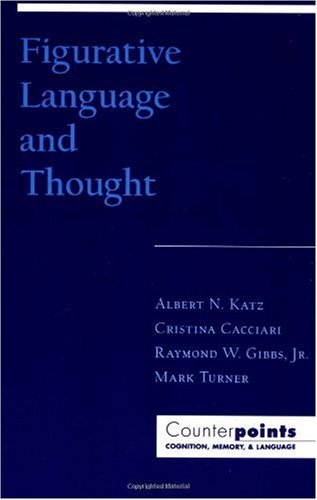
Albert N. Katz, Cristina Cacciari, Raymond W. Gibbs Jr., Mark Turner · Paperback
Our understanding of the nature and processing of figurative language is central to several important issues in cognitive science, including the relationship of language and thought, how we process language, and how we comprehend abstract meaning. In this new volume in the Counterpoints series, internationally recognized experts in the field of figurative language provide a coherent and focused debate on the subject. The book's authors discuss a variety of questions, including: Is metaphor primarily a function of thought, or is it merely a matter of language?
Ronald Langacker · Paperback
Ronald Langacker. Foundations of Cognitive Grammar: Descriptive Application . This is the second volume of a two volume work that introduces a new and fundamentally different conce…
Ronald Langacker · Paperback
Ronald Langacker. Foundations of Cognitive Grammar: Theoretical Prerequisites . This is the first volume of a two volume work that introduces a new and fundamentally different conc…
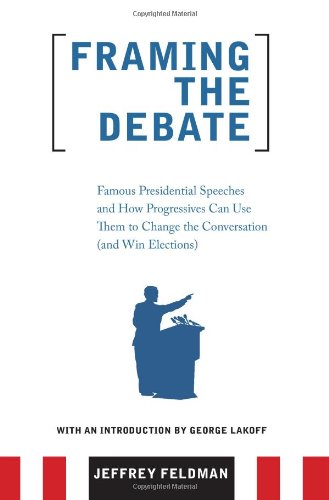
"Frames are mental structures that shape the way we see the world. . . . When you hear a word, its frame is activated in your brain. . . . In politics our frames shape our social policies. . . . Because language activates frames, new language is required for new frames."-George Lakoff For decades, the powerful communications machine of the conservative movement has controlled our national political discourse. One of the biggest obstacles to progressive victory has been seeing what American political speech looks like when it is not "framed" by the Republican noise machine.
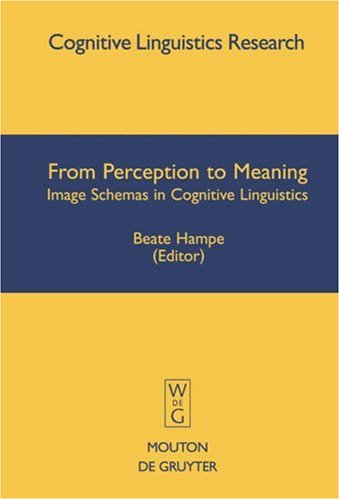
The 1987 landmark publications by G. Lakoff and M. Johnson made image schema one of the cornerstone concepts of the emerging experientialist paradigm of Cognitive Linguistics, a framework founded upon the rejection of the mind-body dichotomy and stressing the fundamentally embodied nature of meaning, imagination and reason - hence language.
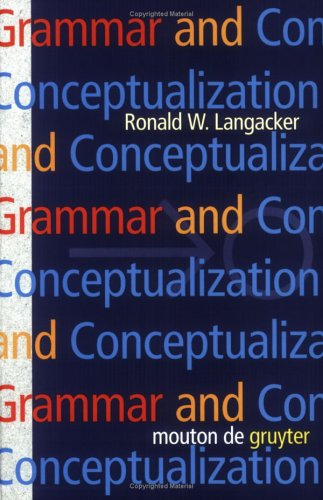
Ronald W. Langacker · Paperback
Grammar and Conceptualization documents some major developments in the theory of cognitive grammar during the last decade. It brings together twelve previous articles (not all easily accessible) which have been substantially revised and integrated to form a coherent and cohesive work. Included are basic theoretical statements, analyses and descriptions of particular phenomena, as well as a preview of future research.
Spatial perception and cognition is fundamental to human abilities to navigate through space, identify and locate objects, and track entities in motion. Moreover, research findings…
Neil Bermel. Linguistic Authority, Language Ideology, and Metaphor: The Czech Orthography Wars (Language, Power and Social Process [Lpsp]) . How does a country find itself \"at war…
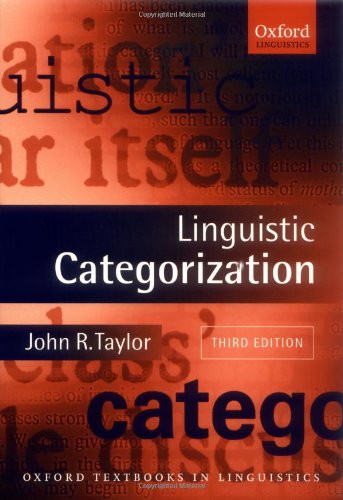
John R. Taylor · Paperback
This book provides a readable and clearly articulated introduction to the field of Cognitive Linguistics. It explores the far-reaching implications of Eleanor Rosch's seminal work on categorization and prototype theory, extending the application of prototype theory from lexical semantics to morphology, syntax, and phonology. The third edition is fully revised and updated to include the considerable developments in Cognitive Linguistics since 1987.
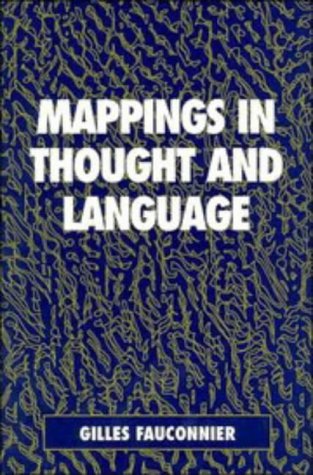
Gilles Fauconnier · Paperback
Meaning in everyday thought and language is constructed at lightning speed. We are not conscious of the staggering complexity of the cognitive operations that drive our simplest behavior. This book reveals the creativity that underlies our effortless use of language in everyday life, when we engage in conversation, understand humor, or solve puzzles. The capacities and principles that we develop from infancy for ordinary thinking and talking are also the ones that drive scientific and artistic thought, high-level reasoning, and conceptual change.
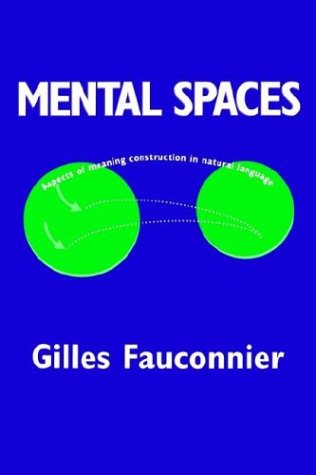
Gilles Fauconnier · Paperback
First published in 1985 (MIT Press), Fauconnier's influential book, Mental Spaces, was instrumental in shaping the new field of cognitive linguistics. The concept of mental spaces--that we develop constructs during discourse that are distinct from linguistic constructs but are established by linguistic expressions--provides a powerful new approach to problems in philosophy and cognitive science concerning thought and language. It includes a new preface that provides context for the theory, and a new foreword by George Lakoff and Eve Sweetser (both of U.C. Berkeley).
Many researchers claim that emotions arise either from human biology (i.e., biological reductionism) or as products of culture (i.e., social constructionism). Are human emotions best characterized as biological, psychological, or cultural entities?
Metaphor and Metonymy at the Crossroads is a collection of essays, most of them written from a cognitive linguistics standpoint by leading specialists in the fields of conceptual metaphor and metonymy, and conceptual integration (blending). The book has two main goals. One of them is to discuss in new, provocative ways the nature of these conceptual mappings in English and their interaction. The other goal is to explore by means of several detailed case studies the central role of these mappings in English.
The book elaborates one of Roman Jakobson's many brilliant ideas, i.e. his insight that the two cognitive strategies of the metaphoric and the metonymic are the end-points on a continuum of conceptualization processes. This elaboration is achieved on the background of Lakoff and Johnson's two-domain approach, i.e. the mapping of a source onto a target domain of conceptualization. Further approaches dwell on different stretches of this metaphor-metonymy continuum. Still other papers probe into the specialized conceptual division of labor associated with both modes of thought.
Zoltán Kövecses · Paperback
This clear and lucid primer fills an important need by providing a comprehensive account of the many new developments in the study of metaphor over the last twenty years and their impact on our understanding of language, culture, and the mind. Beginning with Lakoff and Johnson's seminal work in Metaphors We Live By, Kovecses outlines the development of "the cognitive linguistic theory of metaphor" by explaining key ideas on metaphor.
George Lakoff, Mark Johnson · Paperback
The now-classic *Metaphors We Live By* changed our understanding of metaphor and its role in language and the mind. Metaphor, the authors explain, is a fundamental mechanism of mind, one that allows us to use what we know about our physical and social experience to provide understanding of countless other subjects. Because such metaphors structure our most basic understandings of our experience, they are "metaphors we live by"--metaphors that can shape our perceptions and actions without our ever noticing them.
George Lakoff · Paperback
In this classic text, the first full-scale application of cognitive science to politics, George Lakoff analyzes the unconscious and rhetorical worldviews of liberals and conservatives, discovering radically different but remarkably consistent conceptions of morality on both the left and right. For this new edition, Lakoff adds a preface and an afterword extending his observations to major ideological conflicts since the book's original publication, from the impeachment of Bill Clinton to the 2000 presidential election and its aftermath.
George Lakoff · Paperback
*Moral Politics* takes a fresh look at how we think and talk about political and moral ideas. George Lakoff analyzed recent political discussion to find that the family--especially the ideal family--is the most powerful metaphor in politics today. Revealing how family-based moral values determine views on diverse issues as crime, gun control, taxation, social programs, and the environment, George Lakoff looks at how conservatives and liberals link morality to politics through the concept of family and how these ideals diverge.
George Lakoff, Mark Turner · Paperback
"The authors restore metaphor to our lives by showing us that it's never gone away. We've merely been taught to talk as if it had: as though weather maps were more 'real' than the breath of autumn; as though, for that matter, Reason was really 'cool.' What we're saying whenever we say is a theme this book illumines for anyone attentive." -- Hugh Kenner, Johns Hopkins University
George Lakoff, Mark Johnson · Paperback
George Lakoff and Mark Johnson take on the daunting task of rebuilding Western philosophy in alignment with three fundamental lessons from cognitive science: The mind is inherently embodied, thought is mostly unconscious, and abstract concepts are largely metaphorical. Why so daunting?
William Croft · Paperback
This book is based on the results of research in language typology, and motivated by the need for a theory to explain them. The essence of the approach is (a) that almost all aspects of grammatical structure are language specific, and (b) that language universals are to be found in conceptual structure and in the mapping of conceptual structure on to linguistic form. It proposes intimate links between syntactic and semantic structures, and argues that the basic elements of any language are not syntactic but syntactic-semantic 'Gestalts'.
Mark Turner · Paperback
The great adventure of modern cognitive science, the discovery of the human mind, will fundamentally revise our concept of what it means to be human. Drawing together the classical conception of the language arts, the Renaissance sense of scientific discovery, and the modern study of the mind, Mark Turner offers a vision of the central role that language and the arts of language can play in that adventure.
In the highly influential mental-spaces framework developed by Gilles Fauconnier in the mid-1980s, the mind creates multiple cognitive "spaces" to mediate its understanding of relations and activities in the world, and to engage in creative thought.
William Croft · Paperback
William Croft. Syntactic Categories and Grammatical Relations: The Cognitive Organization of Information .
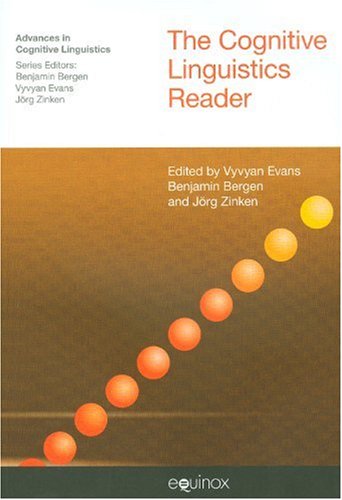
Cognitive Linguistics is the most rapidly expanding school in modern Linguistics. It aims to create a scientific approach to the study of language, incorporating the tools of philo…
Rene Dirven · Hardcover
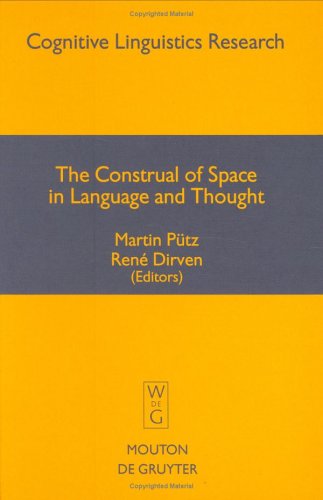
Rene Dirven. The Construal of Space in Language and Thought (Cognitive Linguistic Research) . This volume presents a wide spectrum of analyses of space as seen from the viewpoint o…
Mark Turner · Paperback
We usually consider literary thinking to be peripheral and dispensable, an activity for specialists: poets, prophets, lunatics, and babysitters. Certainly we do not think it is the basis of the mind. We think of stories and parables from Aesop's Fables or The Thousand and One Nights, for example, as exotic tales set in strange lands, with spectacular images, talking animals, and fantastic plots--wonderful entertainments, often insightful, but well removed from logic and science, and entirely foreign to the world of everyday thought. But Mark Turner argues that this common wisdom is wrong.
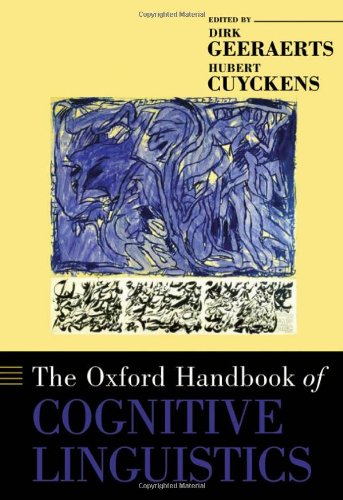
In the past decade, Cognitive Linguistics has developed into one of the most dynamic and attractive frameworks within theoretical and descriptive linguistics The Oxford Handbook of…
Gilles Fauconnier, Mark Turner · Paperback
"*The Way We Think* is a dazzling tour of the complexities of human imagination."--George Lakoff, co-author of *Philosophy in the Flesh* and *Where Mathematics Comes From*. In its first two decades, much of cognitive science focused on such mental functions as memory, learning, symbolic thought, and language acquisition--the functions in which the human mind most closely resembles a computer. But humans are more than computers, and the cutting-edge research in cognitive science is increasingly focused on the more mysterious, creative aspects of the mind.
George Lakoff · Paperback
George Lakoff. Thinking Points: Communicating Our American Values and Vision . Two years ago George Lakoff published the bestselling Don’t Think of an Elephant! Its account of the…
George Lakoff, Rafael Nuñez · Paperback
If Barbie thinks math class is tough, what could she possibly think about math as a class of metaphorical thought?
George Lakoff · Hardcover
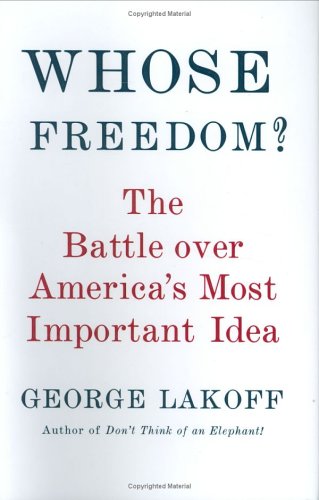
Since September 11, 2001, the Bush administration has relentlessly invoked the word “freedom.” The United States can strike preemptively because “freedom is on the march.” Social security should be privatized in order to protect individual freedoms.
George Lakoff · Paperback
"Its publication should be a major event for cognitive linguistics and should pose a major challenge for cognitive science. In addition, it should have repercussions in a variety of disciplines, ranging from anthropology and psychology to epistemology and the philosophy of science. . . . Lakoff asks: What do categories of language and thought reveal about the human mind? Offering both general theory and minute details, Lakoff shows that categories reveal a great deal."--David E. Leary, *American Scientist*
Dirk Geeraerts · Hardcover
Cognitive Linguistics has given a major impetus to the study of semantics and the lexicon. The present volume brings together seventeen previously published papers that testify to the fruitfulness of Cognitive Linguistics for the study of lexical and semantic topics. Spanning the period from the late 1980s to recent years, the collection features a number of papers that may be considered classics within the field of cognitive linguistic lexicology. The papers are grouped in thematic sections.